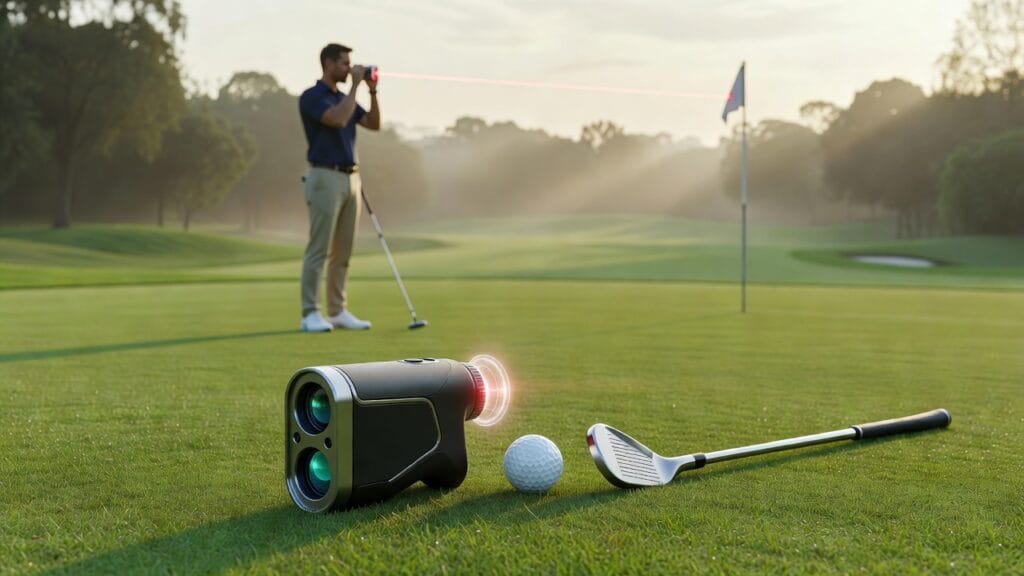
Knowing the correct distance to a flag, bunker, tree, or other target can make club selection significantly easier on the golf course. While course markers and GPS applications provide useful information, laser rangefinders give golfers another way to assess individual shots by measuring a specific visible target. The Mileseey IONME2 golf rangefinder is designed for golfers interested in combining portable distance measurement with modern rangefinder technology in a compact device.
A rangefinder cannot determine the perfect club or execute the shot for you. Wind, elevation, lie, temperature, ball flight, and individual carry distances all influence what happens after a measurement is taken. Its main value is removing some of the uncertainty surrounding target distance, allowing the golfer to make a more informed decision.
For players considering the IONME2, the most useful approach is to look beyond promotional specifications and understand how its functions translate to actual rounds. Measurement consistency, target acquisition, usability, optical clarity, battery performance, tournament functionality, and weather resistance can all matter.
This guide examines what golfers should know about the Mileseey IONME2 golf rangefinder, how laser measurement works, which features deserve attention, and how to use a rangefinder effectively without slowing down play.
Note: Product specifications, included accessories, firmware features, and regional versions can change. Verify current details with Mileseey’s official product documentation or an authorized seller before purchasing.
What Is the Mileseey IONME2 Golf Rangefinder?
The Mileseey IONME2 golf rangefinder is a portable electronic device intended to help golfers measure distances to visible targets on a golf course.
Like other laser golf rangefinders, it operates by directing a laser toward the selected target and calculating distance based on the returned signal.
Golfers commonly measure:
- Flagsticks.
- Bunkers.
- Trees.
- Water hazards.
- Layup points.
- Course features.
Depending on the device’s current specification and operating mode, additional functionality may assist with more sophisticated distance assessment.
Why Golfers Use Laser Rangefinders
Golf courses frequently provide yardage markers, while modern GPS watches and smartphone applications can show distances to greens and hazards.
Laser rangefinders offer a different advantage: they let golfers choose a specific visible target.
This can be useful when a pin is positioned toward the front or back of a large green.
Instead of knowing only the approximate distance to the green, a golfer can measure the flag directly and incorporate that information into club selection.
1. Fast Target Distance Measurement
One of the primary reasons golfers consider the Mileseey IONME2 golf rangefinder is convenience.
A useful rangefinder should provide a measurement quickly enough to fit naturally into a normal pre-shot routine.
The basic process is simple:
- Identify the target.
- Aim through the viewfinder.
- Activate measurement.
- Confirm the displayed distance.
- Select the appropriate shot.
Experienced users can often complete this process without noticeably affecting pace of play.
2. Target Acquisition for Flagsticks
Measuring a flag can be more challenging than measuring a large tree or building because the flagstick is narrow and may have objects behind it.
Golf-focused rangefinders typically incorporate target-acquisition functions intended to help users identify the desired object.
This becomes particularly valuable on courses with:
- Trees directly behind greens.
- Elevated putting surfaces.
- Visually crowded backgrounds.
- Long approach shots.
When testing a rangefinder, consistency in identifying the flag can be more meaningful than maximum theoretical measuring range.
3. Slope-Aware Distance Information
Elevation can materially change how long a golf shot effectively plays.
An uphill target generally requires more carry than an identical horizontal distance, while a downhill shot may play shorter.
Many contemporary rangefinders include slope-related functionality. If the version of the Mileseey IONME2 golf rangefinder you are considering offers this feature, review exactly how it operates and how the calculated information is displayed.
Slope information can be particularly useful during practice rounds or casual play.
However, golfers participating in competitions should understand the relevant Rules of Golf and any Local Rules governing distance-measuring devices. Features that calculate elevation-related adjustments may need to be disabled where their use is not permitted.
Always check the rules applicable to the event rather than assuming a particular mode is acceptable.
4. Compact Design for Course Use
A golf rangefinder spends much of its life being carried around rather than actively measuring targets.
Physical design therefore matters.
Consider:
- Weight.
- Dimensions.
- Grip.
- Button positioning.
- Carrying case.
- Attachment options.
A compact device should be easy to remove, use, and return to storage between shots.
Players who walk the course may prioritize low weight, while cart golfers may care more about convenient mounting or quick accessibility.
5. Optical Clarity and Viewfinder Experience
The display should remain readable in different lighting conditions.
A rangefinder’s optical experience depends on several factors, including:
- Magnification.
- Lens clarity.
- Focus adjustment.
- Display visibility.
- Field of view.
Golfers who wear glasses should also consider whether the eyepiece is comfortable for them.
Technical specifications can describe optics, but practical usability matters just as much. When possible, test how clearly you can identify a flag at realistic golfing distances.
6. Everyday Usability
Good technology becomes frustrating when basic controls are unnecessarily complicated.
The Mileseey IONME2 golf rangefinder should be evaluated on how naturally its controls fit into actual course use.
Consider whether you can:
- Activate measurements quickly.
- Switch relevant modes intentionally.
- Read results without confusion.
- Understand battery status.
- Avoid accidentally changing settings.
A rangefinder that is easy to operate can become part of a consistent shot routine more naturally than one requiring repeated menu navigation.
7. Value Beyond a Single Number
Golfers sometimes compare rangefinders only by maximum measurement distance.
That specification matters, but most golf shots do not require measuring extremely distant objects.
Practical value comes from the combination of:
- Repeatable measurements.
- Reliable target acquisition.
- Clear optics.
- Comfortable handling.
- Suitable battery performance.
- Useful golf-specific features.
The best device for an individual golfer is therefore not necessarily the one advertising the largest number.
How the Mileseey IONME2 Golf Rangefinder Works
Laser rangefinders calculate distance using the travel of a laser signal between the device and the target.
The process occurs rapidly.
The golfer looks through the viewfinder, aims at a target, and activates the measuring function. The unit then calculates the distance and presents the result on its display.
Environmental conditions, hand movement, reflective surfaces, and target size can sometimes affect measurements.
If a result appears unusual, take another reading and compare the figures.
Rangefinder vs GPS Watch
Golfers often ask whether a laser rangefinder is better than GPS.
They perform related but different jobs.
Laser Rangefinder
Useful for precise measurements to visible targets.
Advantages can include:
- Direct flag measurement.
- No need to rely solely on predetermined course points.
- Ability to measure trees and other visible features.
GPS Watch or App
Useful for obtaining broad course information without directly seeing a target.
Advantages may include:
- Front, middle, and back green distances.
- Hole maps.
- Hazard information.
- Convenience from the wrist.
Many golfers use both technologies rather than treating them as substitutes.
Rangefinder vs Smartphone App
A smartphone application can be economical and convenient, but it also requires handling a phone during the round.
Battery drain, notifications, GPS availability, and course mapping can influence the experience.
A dedicated rangefinder has a narrower purpose, which some players prefer because it delivers target distance without unrelated distractions.
Who May Benefit from the IONME2?
The Mileseey IONME2 golf rangefinder can potentially suit golfers across a wide range of skill levels.
Beginners
Beginners can use reliable distance information to start learning actual club distances.
Intermediate Golfers
Players developing course-management skills may use measurements to make more deliberate decisions around hazards and greens.
Experienced Golfers
Skilled players may value precise target information when evaluating approach shots and strategic landing zones.
A rangefinder does not require a low handicap to be useful.
Using a Rangefinder for Better Course Management
Distance information becomes more valuable when paired with realistic knowledge of your own game.
Imagine a bunker that requires a 150-yard carry.
Knowing that number helps only if you also understand which club reliably carries 150 yards under typical conditions.
Good course management combines:
- Target distance.
- Carry distance.
- Wind.
- Lie.
- Elevation.
- Hazard location.
- Personal shot tendencies.
The rangefinder supplies one piece of that decision.
Avoid Chasing the Flag Every Time
Accurate pin distance does not automatically mean the flag should always be your target.
If a pin is positioned close to water or a deep bunker, aiming toward the center of the green may offer a better scoring strategy.
Rangefinders can help identify safer targets as easily as aggressive ones.
Measure bunker carries, wide portions of fairways, trees on doglegs, or conservative landing areas.
This makes the device a course-management tool rather than simply a flag finder.
Understanding Your Actual Club Distances
One of the best ways to gain more value from the Mileseey IONME2 golf rangefinder is to combine it with reliable knowledge of how far you hit each club.
Avoid relying exclusively on the distance of your best-ever shot.
Instead, understand:
- Typical carry.
- Normal total distance.
- Common miss.
- Distance differences between full and controlled swings.
Better personal data turns precise course measurements into more useful decisions.
Tournament Use and Golf Rules
Distance-measuring device rules deserve careful attention.
The Rules of Golf can permit certain distance information while restricting other forms of assistance, and individual competitions may apply Local Rules.
If the rangefinder includes functions beyond straightforward distance measurement, understand how to turn prohibited features off when required.
Before a tournament:
- Review event rules.
- Configure the device correctly.
- Confirm permitted functionality.
- Avoid changing settings unintentionally.
Rules can be updated, so consult current official golf rules for authoritative guidance.
Battery and Charging Considerations
A rangefinder is not useful if it runs out of power halfway through a round.
The exact battery system and endurance of the Mileseey IONME2 golf rangefinder should be verified against current manufacturer specifications.
Regardless of battery type, good habits include:
- Checking charge before playing.
- Following manufacturer charging instructions.
- Avoiding inappropriate storage temperatures.
- Carrying any necessary charging equipment during extended golf trips.
Battery longevity will depend on usage patterns and environmental conditions.
Weather and Storage
Golf equipment regularly encounters heat, humidity, rain, dust, and occasional impacts.
Check the product’s official water-resistance or environmental rating rather than assuming it is waterproof.
After playing in wet conditions, dry the exterior according to manufacturer guidance before placing the device in its case.
Avoid leaving electronics in extremely hot vehicles for extended periods.
Getting More Consistent Measurements
Small technique changes can improve rangefinder use.
Brace your hands when possible and aim deliberately rather than sweeping rapidly across the target.
For distant flags, try measuring the target more than once. Similar readings increase confidence that you are measuring the flag rather than the background.
With practice, this becomes quick enough to fit comfortably into normal play.
Common Mistakes to Avoid
The first mistake is treating every displayed number as unquestionably correct. If a reading looks unrealistic, measure again.
Other common errors include:
- Measuring the background instead of the flag.
- Forgetting tournament settings.
- Allowing the battery to become depleted.
- Ignoring weather-protection guidance.
- Focusing exclusively on the pin rather than safer targets.
Rangefinders improve information, not judgment.
What to Check Before Buying
Before purchasing the Mileseey IONME2 golf rangefinder, confirm current product information through reliable sources.
Review:
- Measurement specifications.
- Optical specifications.
- Available modes.
- Slope functionality.
- Battery system.
- Weather resistance.
- Included accessories.
- Warranty.
- Return policy.
Also check whether the retailer is authorized and whether warranty support applies in your country.
Is the Mileseey IONME2 Golf Rangefinder Worth Considering?
Value depends on how you play.
A golfer who wants target-specific distance measurements and prefers a dedicated device may find a laser rangefinder highly useful.
The IONME2 should be compared with alternatives based on practical performance rather than marketing claims alone.
Ask yourself whether the device offers the right combination of accuracy, usability, optics, durability, and price for your needs.
Golfers who mainly want overhead course maps may prefer GPS, while players who want direct measurements to visible targets may favor laser technology.
Conclusion
The Mileseey IONME2 golf rangefinder is designed to give golfers clearer information about distances to flags, hazards, and other visible course features, helping reduce some of the guesswork involved in club selection and course management. Its usefulness ultimately depends on more than a single specification: target acquisition, optical clarity, measurement consistency, ease of operation, battery performance, and appropriate tournament settings all contribute to the experience. Golfers will gain the most value when they combine rangefinder measurements with realistic knowledge of their own carry distances and strategic targets. Before purchasing, confirm the latest specifications and warranty information from official sources, then compare those features with how you actually play.
FAQs
What is the Mileseey IONME2 golf rangefinder used for?
The Mileseey IONME2 golf rangefinder is designed to measure distances to visible golf-course targets such as flagsticks, hazards, trees, and strategic landing points.
Does the Mileseey IONME2 golf rangefinder measure slope?
Check the current official specifications for the particular IONME2 version and market you are considering. If slope functionality is included, understand when it is permitted under applicable golf rules.
Is a laser rangefinder better than a GPS golf watch?
Neither is universally better. Laser devices measure specific visible targets, while GPS devices can provide mapped distances and course information even when a target is not directly visible.
Can beginners use the Mileseey IONME2 golf rangefinder?
Yes. Distance information can help beginners learn club selection and improve their understanding of course management.
Can I use a golf rangefinder in tournaments?
Permitted functionality depends on the applicable Rules of Golf and Local Rules for the competition. Check the current rules and configure the device appropriately before playing.
What should I check before buying the Mileseey IONME2 golf rangefinder?
Review current official specifications for measurement performance, optics, available modes, battery or charging, environmental protection, included accessories, warranty coverage, and retailer authorization.