Regular HVAC maintenance is one of the most practical ways to protect indoor comfort, manage energy use, and reduce the likelihood of an unexpected heating or cooling failure. A well-maintained system can operate more consistently because filters, coils, drains, electrical components, airflow paths, and controls receive attention before minor issues become disruptive repairs. This guide explains what property owners can safely handle, what trained technicians should inspect, how seasonal service works, and which warning signs require prompt professional attention.
What Is HVAC Maintenance?
HVAC maintenance is the planned inspection, cleaning, testing, and adjustment of heating, ventilation, and air-conditioning equipment. It can apply to furnaces, heat pumps, central air conditioners, ductless mini-splits, packaged units, air handlers, boilers, thermostats, ventilation equipment, and related indoor-air-quality components.
Effective service is more than a quick visual check. It considers how the complete system operates. A clean outdoor unit cannot compensate for a blocked return grille. A new filter cannot correct a failing capacitor. A properly charged cooling circuit may still perform poorly if ducts leak or the thermostat is incorrectly configured.
A complete HVAC maintenance strategy normally has two parts:
- Routine owner care: Simple tasks such as checking filters, keeping vents open, clearing debris around outdoor equipment, and watching for changes in performance.
- Professional preventive service: Technical work involving electrical testing, combustion safety, refrigerant diagnostics, coil inspection, drainage, airflow measurement, and equipment adjustments.
The objective is not to make equipment look clean. The objective is to support safe, efficient, and dependable operation while identifying developing problems early.
Why HVAC Maintenance Matters
Heating and cooling systems operate for hundreds or thousands of hours each year. They move large volumes of air, manage temperature and humidity, and cycle electrical and mechanical components repeatedly. Dust, vibration, moisture, corrosion, worn connections, blocked drainage, and ordinary component fatigue can gradually affect performance.
Consistent HVAC maintenance offers several potential benefits.
More dependable comfort
A system in sound operating condition is more likely to maintain the thermostat setting without unusually long cycles, weak airflow, or large temperature differences between rooms. Preventive checks can reveal airflow restrictions, control issues, and component wear before comfort declines significantly.
Better energy performance
Dirty filters, obstructed coils, failing motors, leaking ducts, and incorrect controls can make equipment work harder. Maintenance does not guarantee a particular reduction in utility bills, but restoring proper airflow and heat transfer can help a system avoid unnecessary energy use.
Lower risk of avoidable failures
No service plan can prevent every breakdown. Components can fail without warning, especially as equipment ages. However, HVAC maintenance can uncover loose electrical connections, deteriorating capacitors, clogged drains, abnormal temperatures, and other warning signs before they cause a shutdown or secondary damage.
Healthier indoor conditions
Filters, coils, drain pans, ducts, humidity controls, and ventilation all influence indoor air. Maintenance can help manage dust accumulation and moisture problems. It should not be presented as a medical treatment, but it is an important part of maintaining a cleaner and more controlled indoor environment.
Stronger equipment records
Written service records show what was inspected, what readings were observed, which parts were replaced, and how performance changed. This history helps technicians diagnose recurring concerns and helps owners make informed repair-versus-replacement decisions.
11 Essential HVAC Maintenance Steps
The most useful checklist combines safe owner tasks with professional diagnostic work. Property owners should never open electrical compartments, handle refrigerant, bypass safety controls, or work on combustion equipment unless they are properly qualified.
1. Build an HVAC Maintenance Schedule
Preventive care works best when it is scheduled rather than postponed until the system fails. Most homes benefit from professional service before the major heating and cooling seasons. Heat pumps that operate throughout the year may need especially consistent attention because the same equipment provides both heating and cooling.
Create calendar reminders for filter checks, professional appointments, thermostat battery replacement where applicable, outdoor-unit inspection, and condensate monitoring. Commercial properties should use a documented schedule based on equipment type, operating hours, occupancy, manufacturer guidance, and facility requirements.
A reliable HVAC maintenance schedule should also account for local conditions. Heavy pollen, construction dust, salt air, humidity, pet hair, wildfire smoke, or continuous operation may justify more frequent inspections.
2. Check and Replace Air Filters
A filter protects the system from airborne debris while supporting indoor air management. When it becomes heavily loaded, airflow may fall. Reduced airflow can affect comfort, increase operating time, strain the blower, and contribute to coil-related problems.
Check the filter regularly and replace or clean it according to the manufacturer’s instructions. The correct interval varies. A lightly occupied home may not load a filter as quickly as a property with pets, smokers, renovation work, or high system runtime.
Use the correct filter dimensions and confirm its airflow direction. A higher efficiency rating is not automatically better for every system. A filter that creates excessive resistance may reduce airflow if the equipment and ductwork were not designed for it. A qualified HVAC maintenance technician can help determine an appropriate filtration level.
3. Keep Supply Vents and Return Grilles Clear
Furniture, rugs, curtains, boxes, and dust can obstruct vents and returns. Closed or blocked registers may disturb airflow balance and prevent rooms from reaching the desired temperature.
Walk through the property and confirm that supply registers are open and unobstructed. Vacuum visible dust from grilles without pushing objects into the ductwork. Make sure the main return areas have enough clearance to draw air freely.
Persistent weak airflow from one or more registers requires more than routine cleaning. It may indicate duct leakage, a disconnected duct, a crushed flexible run, incorrect balancing, a dirty coil, or blower trouble. Professional HVAC maintenance should include evaluation of these possibilities when symptoms are present.
4. Clear the Outdoor Unit
An outdoor condenser or heat-pump unit needs open space for airflow. Leaves, grass clippings, weeds, mulch, and windblown debris can collect around the cabinet and coil.
Turn the system off using the appropriate user controls before performing simple exterior housekeeping. Remove loose debris from the surrounding area and maintain the manufacturer’s recommended clearances. Do not bend coil fins, remove panels, or spray electrical components.
Shrubs should not crowd the unit, and dryer vents should not discharge lint toward it. After severe weather, visually inspect the equipment for impact damage, displaced panels, flooding, or heavy debris. If damage is visible, schedule HVAC maintenance before restarting the system.
5. Inspect the Condensate Drain
Air-conditioning equipment removes moisture from indoor air. That water usually collects in a drain pan and exits through a condensate line. Algae, sludge, dust, or a damaged line can restrict drainage, potentially causing leaks, ceiling damage, microbial growth, or a safety-switch shutdown.
Property owners can watch for standing water, staining, damp odors, or repeated drain-switch trips. The exact cleaning method depends on system design, so follow the equipment or contractor’s instructions rather than pouring unapproved chemicals into the line.
During professional HVAC maintenance, the technician should inspect the drain pan and line, verify drainage, and examine accessible components for leakage or deterioration. In humid climates, condensate management deserves particular attention because the cooling system may remove substantial moisture.
6. Clean and Evaluate HVAC Coils
The indoor evaporator coil absorbs heat, while the outdoor coil releases or absorbs heat depending on the operating mode. Dirt on these heat-transfer surfaces can interfere with performance.
Outdoor coils may collect grass, lint, pollen, and airborne debris. Indoor coils can accumulate material that passes through or around the filter. Cleaning procedures differ by coil design and condition. Aggressive pressure, harsh chemicals, or improper brushing can damage delicate fins and coatings.
Coil service is therefore a core professional HVAC maintenance task. A technician can inspect both sides of accessible surfaces, select an appropriate cleaning method, protect electrical parts, and investigate why unusual contamination occurred. A badly soiled indoor coil may indicate filtration gaps, return-duct leakage, or neglected filters.
7. Test Thermostats and System Controls
A thermostat should read temperature reasonably, follow programmed schedules, and call for heating or cooling correctly. Incorrect settings can appear to be equipment failures and can waste energy.
Review the operating mode, target temperature, fan setting, schedule, and smart-thermostat features. Replace batteries when required. Avoid dramatic thermostat changes intended to make the system heat or cool faster; most conventional systems do not operate faster simply because the set point is more extreme.
Professional HVAC maintenance can include control-sequence testing, sensor checks, staging verification, equipment communication, and thermostat calibration where appropriate. If a smart thermostat was installed recently, confirm that it is compatible with the system and configured for the correct equipment type.
8. Examine Electrical Components Safely
Heating and cooling systems depend on contactors, capacitors, relays, motors, circuit boards, wiring, disconnects, and protective devices. Heat, vibration, moisture, insects, and age can affect these components.
Electrical compartments can retain dangerous voltage even when equipment appears to be off. Owners should limit their role to observing symptoms such as frequent breaker trips, buzzing, burning odors, delayed starts, or intermittent operation. Do not repeatedly reset a breaker that continues to trip.
A qualified technician performing HVAC maintenance can isolate power, inspect connections, test components using appropriate instruments, compare readings with manufacturer specifications, and look for heat damage or corrosion. Electrical measurements should be documented so developing trends can be recognized.
9. Verify Refrigerant-System Performance
Air conditioners and heat pumps use a sealed refrigerant circuit to transfer heat. Refrigerant is not a fuel that should be routinely consumed. If a system is undercharged because of a leak, simply adding refrigerant without evaluating the cause may provide only temporary relief.
Possible signs of cooling-circuit trouble include reduced capacity, ice on refrigerant lines or coils, long runtimes, unusual noises, or unexpectedly high energy use. These symptoms can also have other causes, including airflow restrictions.
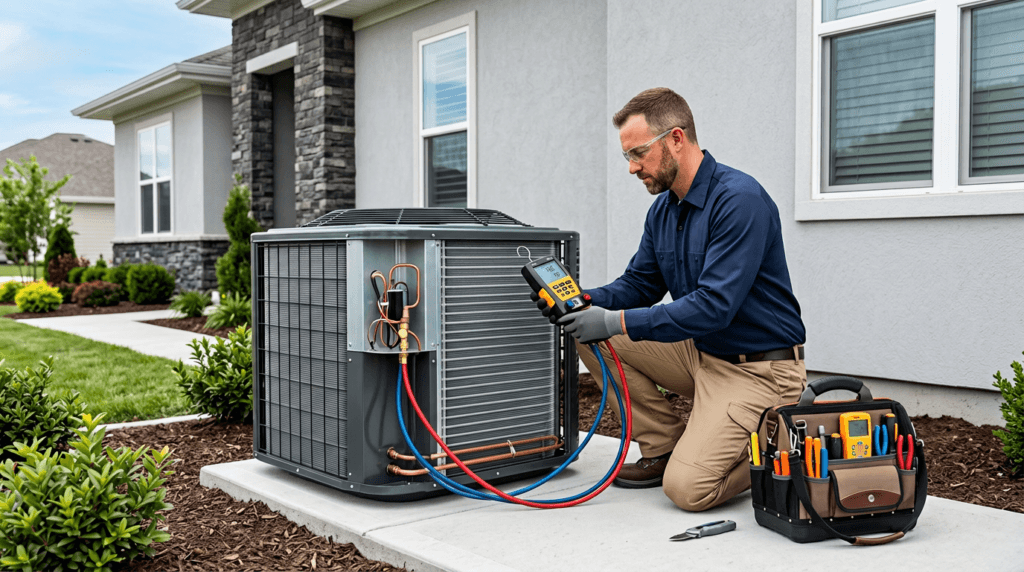
Refrigerant diagnostics and handling require specialized training, tools, and compliance with applicable rules. Professional HVAC maintenance may include temperature and pressure measurements when warranted, leak evaluation, line-insulation inspection, and assessment of the system’s overall operating conditions.
10. Check Heating and Combustion Safety
Fuel-burning furnaces and boilers require careful safety inspection. Venting problems, damaged heat exchangers, improper combustion, gas leaks, blocked flues, and malfunctioning safeties can create serious hazards.
Owners should maintain working smoke and carbon monoxide alarms according to manufacturer and local safety guidance. Keep combustible materials away from heating equipment. If a gas odor, alarm, soot, flame abnormality, or combustion concern occurs, leave the affected area and follow the fuel supplier’s or emergency authority’s safety instructions.
Professional heating-season HVAC maintenance should inspect applicable burners, ignition, flame sensing, venting, safety controls, temperature rise, blower operation, and combustion conditions. The precise checklist depends on the equipment and manufacturer requirements.
11. Assess Ductwork, Insulation, and Air Balance
Conditioned air can be lost through disconnected, damaged, or poorly sealed ducts. Duct problems may also draw hot, cold, dusty, or humid air from attics, crawl spaces, garages, or utility areas.
Look for accessible damage, loose connections, deteriorated insulation, condensation, or obvious air leakage. Do not seal ducts with general-purpose cloth duct tape, which may deteriorate. Appropriate materials and methods depend on the duct type and location.
If certain rooms remain uncomfortable, ask for an airflow and duct assessment as part of HVAC maintenance. Equipment capacity, duct design, insulation, window exposure, building leakage, and balancing all influence room-by-room performance. Replacing equipment without addressing distribution problems may leave the original comfort complaint unresolved.
HVAC Maintenance for Air Conditioners, Furnaces, and Heat Pumps
Different systems share common needs, but each also has equipment-specific requirements.
Air-conditioner HVAC maintenance
Cooling service should focus on the indoor and outdoor coils, condensate drainage, blower performance, electrical components, controls, refrigerant-circuit operation, and temperature change across the system. In humid regions, moisture removal and drain reliability are particularly important.
Furnace HVAC maintenance
Furnace service should address ignition, burners, flame sensing, heat-transfer surfaces, venting, safeties, blower operation, filtration, and temperature rise. Gas and combustion work belongs to trained professionals.
Heat-pump HVAC maintenance
A heat pump operates in both heating and cooling modes. Service may include reversing-valve operation, defrost controls, auxiliary heat, outdoor-coil condition, refrigerant performance, drainage, airflow, and electrical checks. Because heat pumps often run through multiple seasons, consistent care is important.
Ductless-system HVAC maintenance
Ductless mini-splits contain indoor filters, coils, blowers, drain components, and outdoor equipment. Indoor heads can accumulate dust and biological residue if neglected. Follow manufacturer cleaning guidance and arrange deeper professional service when contamination or drainage problems appear.
How Often Should HVAC Maintenance Be Scheduled?
A common approach is to arrange cooling service before peak summer use and heating service before winter. A combined annual appointment may be sufficient for some equipment and climates, while heat pumps, commercial systems, heavily used equipment, or harsh operating environments may benefit from more frequent attention.
Filter checks should occur more often than professional tune-ups. Inspecting a filter monthly during heavy-use periods is reasonable, but replacement should be based on actual condition, system requirements, and manufacturer guidance rather than a universal interval.
The best HVAC maintenance frequency depends on:
- Equipment type and age
- Daily operating hours
- Occupancy and building use
- Pets and indoor particle sources
- Local pollen, dust, salt, and humidity
- Manufacturer recommendations
- Warranty conditions
- Previous repair history
- Commercial or regulatory obligations
A trustworthy contractor should explain why a particular service interval is recommended instead of offering the same plan for every building.
DIY HVAC Maintenance vs. Professional Service
Property owners can perform useful preventive tasks without opening equipment. Safe activities typically include checking filters, keeping registers clear, managing vegetation around the outdoor unit, reviewing thermostat settings, and observing noise, odor, drainage, or performance changes.
Professional service is appropriate when work involves electrical testing, combustion, refrigerant, internal components, coil chemicals, airflow diagnostics, or safety controls. Attempting technical repairs without the required skills can cause injury, equipment damage, code violations, or warranty complications.
A productive division of responsibility is simple: owners keep equipment accessible, clean around it, replace approved filters, and report changes early; technicians diagnose, measure, clean internal components, adjust controls, and complete specialized safety work.
Warning Signs That HVAC Maintenance Is Overdue
Do not wait for a total shutdown if the system’s behavior changes. Arrange an inspection when you notice:
- Weak or inconsistent airflow
- Rooms that are suddenly difficult to heat or cool
- Unusually long cycles or frequent starts and stops
- New rattling, grinding, buzzing, hissing, or squealing sounds
- Musty, burning, electrical, or fuel odors
- Water near the indoor unit or recurring drain problems
- Ice on the coil or refrigerant lines
- Repeated breaker trips or blown fuses
- A sudden, unexplained increase in energy consumption
- Thermostat readings that do not match indoor conditions
- Excessive indoor humidity during cooling operation
Turn the system off and seek urgent professional help when there is smoke, sparking, a burning smell, a suspected gas leak, a carbon monoxide alarm, severe water leakage near electrical equipment, or another immediate safety concern.
How to Choose an HVAC Maintenance Provider
A competent provider should be properly licensed or registered where required, insured, experienced with the equipment type, and willing to explain findings. Ask what a maintenance visit includes, which measurements are recorded, whether a written condition report is provided, and how repair recommendations are prioritized.
Avoid choosing solely on the lowest advertised price. An extremely short tune-up may omit meaningful inspection or testing. At the same time, a long checklist is not proof of quality if it contains vague items that cannot be verified.
Look for transparent communication. A professional should distinguish urgent safety issues from optional improvements, show evidence when accessible, provide clear estimates, and obtain approval before additional work. Homeowners should feel comfortable asking why a part needs replacement and what could happen if the repair is postponed.
For older systems, request an objective discussion of remaining serviceability. The contractor should compare repair cost, reliability, comfort, efficiency, refrigerant considerations, and expected ownership plans without using fear or unsupported promises.
HVAC Maintenance Cost and Long-Term Value
The cost of a tune-up varies by equipment type, number of systems, location, service depth, accessibility, and whether a maintenance agreement is involved. A basic inspection for one residential split system is different from servicing multiple heat pumps, rooftop units, boilers, or specialized controls.
When comparing proposals, review what is included rather than focusing only on the final price. Ask whether filters, coil cleaning, drain service, combustion testing, refrigerant diagnostics, travel, and minor parts are included or billed separately.
The financial value of HVAC maintenance comes from risk management. Preventive service may help avoid some emergency calls, reduce secondary damage from drainage or component failures, support efficient operation, and give owners more time to budget for eventual replacement. It cannot eliminate normal wear or guarantee that equipment will not fail.
Seasonal HVAC Maintenance Checklist
Spring and early summer
- Check the filter and all accessible vents.
- Clear vegetation and debris from outdoor equipment.
- Test cooling before the first extreme heat.
- Watch the condensate drain during operation.
- Schedule professional cooling inspection.
- Review thermostat schedules for summer occupancy.
Autumn and early winter
- Check the filter and return-air path.
- Test heating before the first cold period.
- Confirm smoke and carbon monoxide alarms operate correctly.
- Keep combustible storage away from heating equipment.
- Schedule professional heating inspection.
- Review thermostat schedules for winter occupancy.
Throughout the year
- Note changes in sound, smell, airflow, humidity, and runtime.
- Keep service records, invoices, and equipment documents.
- Do not ignore repeated resets or intermittent faults.
- Maintain clear access for inspection and emergency service.
Conclusion
HVAC maintenance is a planned process that protects comfort, supports equipment performance, and helps property owners identify developing concerns before they become larger problems. Filters, vents, outdoor clearances, drainage, coils, controls, electrical components, refrigerant performance, heating safety, and ducts all contribute to how well the system operates.
The most effective approach combines regular owner observations with qualified professional service. Build a schedule around equipment type, climate, runtime, and manufacturer guidance. Keep accurate records, address warning signs promptly, and expect clear explanations from the service provider. Consistent HVAC maintenance cannot prevent every repair, but it can reduce avoidable risk and help owners make better decisions throughout the equipment’s service life.
FAQs
1. How often should HVAC maintenance be performed?
Most systems should receive professional service at least annually, while heat pumps and heavily used equipment may benefit from twice-yearly visits. Follow manufacturer and technician guidance.
2. What does professional HVAC maintenance include?
It typically includes inspection, cleaning, control testing, airflow evaluation, drainage checks, electrical assessment, and equipment-specific safety or performance measurements.
3. Can I perform HVAC maintenance myself?
You can check filters, clear vents, manage debris, and observe performance. Electrical, combustion, refrigerant, and internal repair work should be left to qualified technicians.
4. Does HVAC maintenance lower energy bills?
It may help prevent avoidable energy waste caused by restricted airflow, dirty components, or control problems, but actual savings depend on equipment and building conditions.
5. Is an HVAC maintenance plan worth it?
A plan can be useful if it provides thorough scheduled service, priority support, clear documentation, and fair terms. Compare inclusions, exclusions, and total cost before enrolling.
6. What happens if HVAC maintenance is neglected?
Neglect can contribute to poor airflow, reduced comfort, drainage issues, higher operating stress, indoor-air concerns, and a greater risk of preventable breakdowns.