A wafer roll machine runs hot, moves fast, and touches food all day, so small neglect turns quickly into serious downtime. An automatic wafer roll machine maintenance log is the simple record that keeps the equipment clean, safe, and steady, and it takes nothing but minutes per shift. The pages below explain the machine, the checks, and how to keep the log itself working for you.
Every food plant wants the same thing: steady output and no surprise breakdowns. The maintenance log delivers both by turning routine care into a written habit that anyone on the team can follow. Steady output comes from steady care, and the record is what keeps the care steady. The record turns memory into a shared asset that survives shift changes.
Why the Maintenance Log Matters
A machine that runs unattended hides its wear until a part fails. The automatic wafer roll machine maintenance log makes the wear visible, because every check and every reading lands in the same place where the next shift can see it.
Problems Surface Before Failure
A baking plate that runs a shade cool, a belt that drifts, a bearing that runs dry; all of these announce themselves long before a breakdown. The log catches them in the opening stage, when a quick fix still beats a full stop.
Handovers Stay Honest
Shifts change, and memory does not travel. A written log travels instead, so the person starting a shift knows exactly what the person before observed. Nothing gets lost between hands.
How the Machine Runs
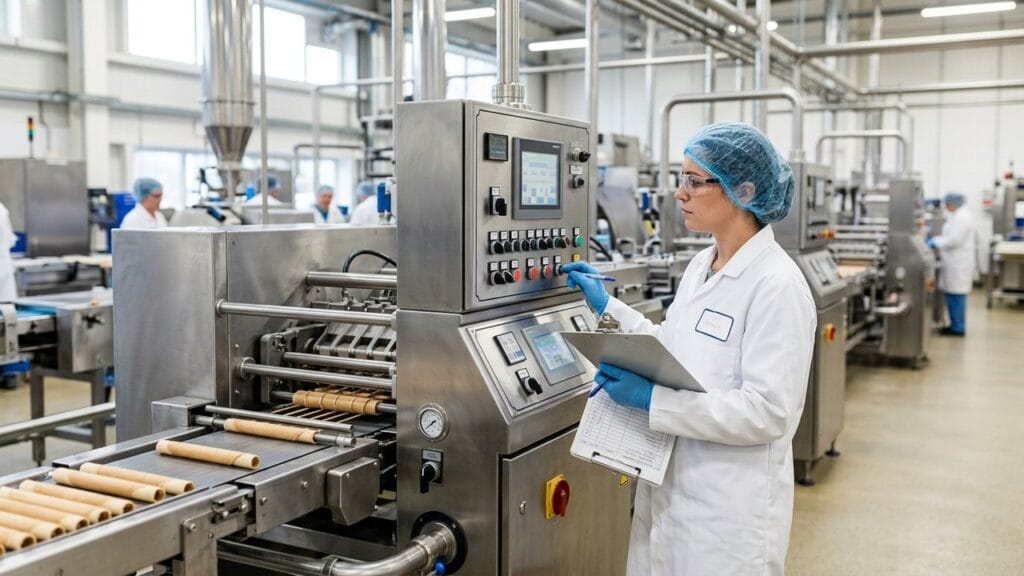
Knowing where the wear happens starts with knowing how the line works. The machine moves batter through a short, hot journey that shapes it into rolls.
The Batter Stage
A tank holds the batter, and a pump feeds it to the baking section at a steady rate. The pump’s flow decides the size of every roll, so its setting matters more than it seems. A steady flow keeps every roll the same size from morning to night. Every reading logged is a data point that the next week can use.
The Baking Stage
Hot plates press the batter into thin sheets. The plates must stay clean and evenly heated, because any drift here shows up as color and texture defects on the finished product. Clean plates transfer heat evenly, and even heat bakes even sheets. A clean machine runs cooler and lasts longer than a dirty machine.
The Rolling and Cooling Stage
The baked sheet is shaped while it is still warm, then it travels along a conveyor to cool and set. The rolling unit and the belts take the most mechanical wear, since they move through every cycle. Warm sheets roll cleanly, while cool sheets crack under the pressure. The rollers spin constantly, so their health decides the product. A worn roller leaves its mark on every roll that follows.
The Essential Checks
These checks keep the line dependable. Each check is quick, and each belongs in the log.
Clean the Baking Plates
Residue builds on the plates with every batch and burns onto the surface. A clean plate bakes evenly, so wipe the plates after every shift and note the condition in the log. A minute spent at the panel prevents a long stop later. A quick wipe now prevents a deep scrub later. Prompt care is always the easier path in time and trouble.
Season the Surface
A food-safe coating keeps the batter from sticking. When the surface dulls, note it in the log and plan a re-coating before quality slips.
Confirm the Plate Temperature
Heat drifts as sensors age. Check the plate reading against a reference at the start of each shift, and record the reading so a slow drift becomes visible across days. The panel remembers what people forget, so reading it matters.
Lubricate the Moving Parts
Chains, gears, and bearings need food-safe grease on a steady schedule. A dry bearing screams before it seizes, and the log should record each lubrication along with the date. Lubrication done on schedule keeps every moving part quiet. Teams that write things down argue less about what happened. The page settles the question without a debate.
Inspect the Rolling Mechanism
The rolling unit shapes every roll, so a misaligned guide or a worn roller changes the product silently. Watch the shape coming off the line and note any change in the log. A steady shape means a steady machine, and the log proves it. The log is the bridge between the operator who saw a problem and the team that fixes it. Information that reaches the right hands prevents the next fault.
Clean the Sensors and Panel
Dust and batter mist settle on sensors and buttons. Wipe them gently, check the readouts, and log any warning the panel shows so nothing gets ignored. A dusty sensor sends wrong numbers, and wrong numbers steer wrong choices. The control panel offers clues, and a trained eye reads them. A careful operator hears the machine before it fails.
Check the Conveyor Belts
A drifting belt rubs its edge and frays. Confirm the tracking and tension during the shift, and write down any adjustment so the next shift knows the belt was touched. Belt wear shows at the edges before it shows anywhere else. A daily walk around the line catches most trouble before it starts. The habit takes minutes and gives back hours.
Test the Safety Stops
Emergency stops and guards protect the people beside the machine. Test them on a set schedule, and record the test in the log so the safety record stays complete. Guards and stops exist for the moments that go wrong without warning. Small leaks and loose parts show themselves during a careful walk around the machine. A loose bolt today is a dropped part tomorrow.
Record Every Task in the Log
The log is the habit that ties the other checks together. Every cleaning, reading, and adjustment goes into the automatic wafer roll machine maintenance log, so the whole picture stays readable.
How to Structure the Log
A useful log stays simple. Too many columns discourage filling it out, while too sparse a record leaves gaps that matter later.
The Columns That Matter
A tidy automatic wafer roll machine maintenance log captures a small set of facts. Record the date, the task performed, the person who did it, the reading or observation, and any follow-up needed. Five short columns capture everything without turning the log into a chore. The log should read like a conversation between shifts rather than a form to dread. Documentation turns experience into something the whole plant can use. Shared knowledge outlives any individual worker.
Keep It Visible
Keep the log beside the machine, not in an office drawer. A log that is within reach gets filled in; a log that is hidden gets forgotten. A short, honest note beats a long, empty page. A machine that is understood lasts far longer than a machine that is merely run. Understanding begins with the written record.
Common Failures the Log Prevents
Each of these failures follows a pattern that the log makes visible before the damage is done.
Cracking During Rolling
The automatic wafer roll machine maintenance log flags this before it spreads. When the sheet cools too much before shaping, the roll cracks. The log’s temperature notes show the drift that leads to it.
Uneven Color
Uneven color means the plates are dirty or the heat is uneven. Both conditions appear in the daily entries long before a customer complaint does. The daily page is where the defect shows up before it ships. The best maintenance is invisible, because nothing breaks. Quiet shifts are the proof that the log is working.
Sticking to the Plates
Sticking follows a worn coating or a change in the batter. The log’s coating notes and batter remarks point to the cause quickly.
Uneven Diameter
Rolls that vary in size usually mean the pump flow has drifted. The recorded pump settings make that drift easy to trace and correct. The best fix is the correction made before the line stops.
Building the Habit
A log only works when the team uses it. These small habits turn the record from a chore into a routine that carries itself.
Start Small
The log begins with an honest line each shift. As writing becomes routine, the details grow on their own, and the record deepens without extra effort.
Make It Visible
Keep the record beside the machine where every operator passes. Visibility turns the log from an afterthought into a working tool that people actually reach for.
Keep Spares Ready
A shelf of the parts that wear fastest, such as seals and belts, keeps a small fault from growing into a long stop. The log’s history shows which parts to keep close, because the record reveals what breaks first.
Assign an Owner
Each check needs a name beside it. When a person owns a task, the task gets done, and the log shows who to ask when something looks odd. Ownership keeps the routine from slipping between hands.
Read It Back
Patterns hide in the daily notes until someone reads them back. A weekly skim shows the trends that a lone busy day hides, and it points to the next fix early.
Safety Practices
Maintenance is safer when it follows fixed rules. These habits protect the person holding the wrench and the people working nearby.
Lock Out Before You Reach In
Cut the power and lock the switch before touching plates, rollers, or belts. A running machine gives no second chances, and the lock-out step belongs in every log entry that involves contact. Safety and quality come from the same steady hands. Every plant has its own rhythm, and the log should match it. The record bends to the line, never the line to the record.
Wear the Right Protection
Heat-resistant gloves, a hair covering, and clean tools belong on every maintenance job. Food safety and personal safety share the same discipline. A calm, careful team keeps a food line running longer. Steady attention to the small parts protects the whole line. The smallest check often prevents the largest failure.
Conclusion
A wafer roll machine rewards steady attention, and the automatic wafer roll machine maintenance log is how that attention becomes a system. Clean plates, honest readings, timely lubrication, and a written record turn a demanding machine into dependable equipment. The checks take minutes, the log takes discipline, and together they keep the line producing rolls instead of producing surprises.
Frequently Asked Questions
What is an automatic wafer roll machine maintenance log?
It is a written record of the checks, readings, and repairs performed on the machine, kept at the line for the whole team.
How often should the log be filled in?
Daily, with every cleaning, temperature reading, and adjustment recorded as it happens during the shift.
Which checks matter most?
Plate cleaning, temperature confirmation, lubrication, belt tracking, and safety stop tests carry the most weight for reliability.
Why do baked rolls crack during shaping?
The sheet cools too much before rolling, and the log’s temperature notes reveal the drift before the batch spoils.
What makes a log useful?
Clear columns, a place for readings, and a spot beside the machine so it gets filled in every shift.
Who should fill in the log?
The operator or technician who performs the task records it, so the entry stays accurate and immediate.