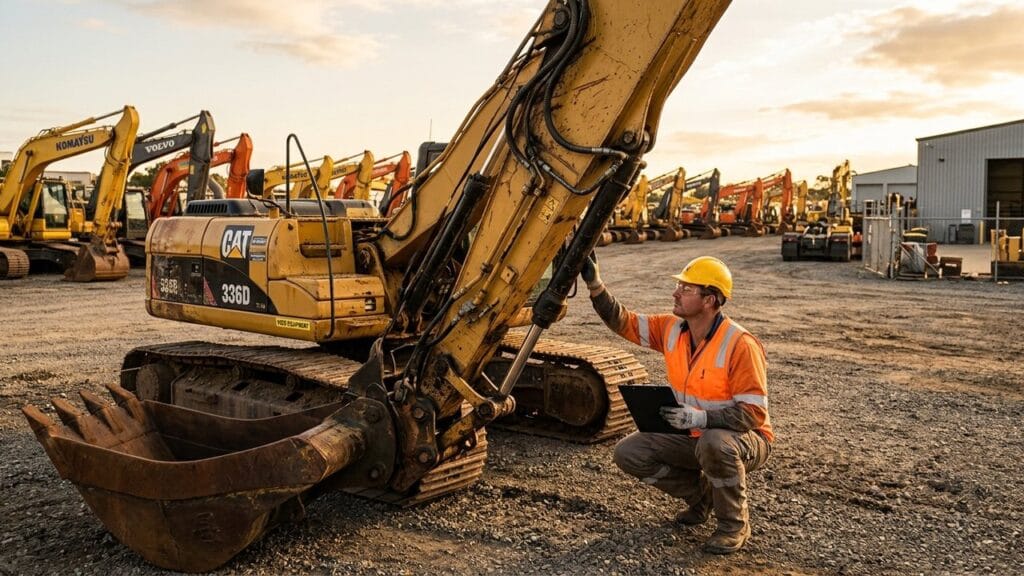
Buying a used excavator from a supplier you have never met raises one question before anything else: can the machine, and the company selling it, actually be verified before you pay. A pre-shipment excavator inspection is the answer. It documents the condition of the engine, hydraulics, and undercarriage before the machine leaves the yard, so you are not buying on a photo and a promise. Here is how it works and why it matters.
What Is a Pre-Shipment Excavator Inspection?
A pre-shipment excavator inspection is a documented condition check performed on a machine before it is loaded for export. Instead of trusting the advertised hour meter, the buyer receives evidence of the machine’s actual state, including engine health, hydraulic function, and undercarriage wear. The goal is to catch problems before the machine is paid for in full and shipped across an ocean.
Liehuang, a used excavator supplier based in China, builds this into its standard process. Every machine it dispatches includes a detailed mechanical condition record for the engine, hydraulics, and undercarriage prior to loading. Verification through a pre-shipment excavator inspection is treated as a prerequisite rather than an optional request.
Why Verification Matters
The hour meter alone is not proof of condition. A machine advertised at 3,000 hours could show undercarriage wear closer to double that reading. That hidden damage quietly erases the savings a buyer thought they were getting. A proper pre-shipment excavator inspection is meant to catch that before it becomes the buyer’s problem.
The Risk of Skipping Inspection
Buying an unseen machine from an overseas supplier carries real risk. Without documented evidence, a buyer may receive a machine with worn components, falsified hours, or hidden damage. The pre-shipment excavator inspection exists to replace trust with verifiable evidence.
What a Pre-Shipment Excavator Inspection Covers
A thorough pre-shipment excavator inspection examines the systems that determine a machine’s value and reliability.
Engine Condition in a Pre-Shipment Excavator Inspection
The inspection records engine health, including startup performance, exhaust color, leaks, and any signs of wear or repair. Engine condition drives both resale value and the machine’s remaining working life.
Hydraulic Systems
Hydraulic function is checked across the boom, arm, bucket, and swing. Cylinder leaks, slow movement, and unusual noise are documented, since hydraulic repairs are among the most expensive on any excavator. A thorough pre-shipment excavator inspection never skips this step.
Undercarriage Wear
The undercarriage is a key indicator of true hours. Track wear, sprockets, rollers, and idlers are measured, because undercarriage condition often reveals whether the hour meter reading is realistic. This measurement is the heart of any pre-shipment excavator inspection.
Serial Number Verification
The serial number is recorded and photographed so the buyer can confirm the exact machine inspected is the one that ships. This is a core part of any credible pre-shipment excavator inspection, closing the gap between what was inspected and what arrives.
Documentation and Media
A complete pre-shipment excavator inspection produces evidence: walkaround video, hour-meter photos, serial details, and a loading plan. This record is what gives a pre-shipment excavator inspection its value, giving the buyer something concrete to refer to when the machine lands.
How Liehuang Structures the Process
Liehuang uses a staged workflow that ties payment to evidence rather than blind trust.
Staged Payment Workflow
Quote and Machine Selection in a Pre-Shipment Excavator Inspection
The buyer chooses the model, hours, attachments, and export destination before any stock is reserved.
Deposit to Lock Stock
A deposit holds the exact machine while inspection media and documents are prepared, so the buyer is committed to a specific unit.
Inspection Proof Sent
Before the balance is due, the buyer receives walkaround video, hour-meter photos, serial details, and the loading plan as part of the pre-shipment excavator inspection. This is the evidence that makes the process credible.
Balance After Confirmation
The remaining balance is paid only after the buyer confirms the machine condition and export evidence, not before.
Shipment and Tracking
The supplier shares loading photos, bill of lading progress, and customs support until the machine is released at the destination.
What Determines Used Excavator Value
Understanding value helps buyers read an inspection report correctly. Several factors move the price of a used machine.
Tonnage Class
Larger machines carry a higher base price and generally hold resale value better than compact units, which is why the scope of a pre-shipment excavator inspection varies by machine size.
Brand and Model
Established brands such as Caterpillar, Komatsu, and Volvo typically command a premium over lesser-known names because of parts availability and operator familiarity.
Working Hours
Lower hour-meter readings support a higher price, but service history matters as much as the number itself. This is why a pre-shipment excavator inspection checks actual wear against the meter rather than trusting the reading alone.
Documentation Completeness
Verifiable serial numbers, inspection photos, and service records justify a premium over undocumented listings. This is precisely what a pre-shipment excavator inspection provides, and it is why inspected machines often command higher prices.
Shipping Terms
FOB reflects machine price only, CFR adds freight, and CIF adds freight plus minimum insurance. Each Incoterm shifts different costs and risks between buyer and seller.
Real-Time Market Context
The used construction equipment market is large and active, which makes verification more important than ever. Industry research from Mordor Intelligence values the global used construction equipment market at about $132.67 billion in 2026, projected to reach $174.28 billion by 2031. Excavators are the single largest category, holding roughly 42.68 percent of market share.
Prices tell a nuanced story. Used excavator prices average around $159,000 to $160,000, and machines under 4,000 hours typically retain 60 to 75 percent of their original value. In 2026, crawler excavator asking values have softened about 4.63 percent year over year, which creates opportunity for prepared buyers but also means condition matters more. With supply tightening in some classes, documented condition from a pre-shipment excavator inspection is what separates a sound purchase from an expensive mistake.
Why China Is a Major Source
Rapid Fleet Turnover
China’s domestic construction fleet turns over machinery constantly, keeping the pool of available used excavators wide and selection broad.
Breadth of Brands
Suppliers like Liehuang carry nine major brands, including Caterpillar, Komatsu, Volvo, Sany, Hyundai, Doosan, Kubota, Hitachi, and Kobelco, across four tonnage classes.
Factory-Direct Pricing
Sourcing from China’s used-machinery trading base removes a layer of regional dealer markup, which is why overseas buyers often look there first. A pre-shipment excavator inspection protects that pricing advantage from being lost to hidden condition problems.
How to Protect Yourself When Buying Overseas
A pre-shipment excavator inspection is essential, but buyers should take additional steps to protect themselves.
Confirm Import Compliance
Import rules vary by destination. The US EPA, for example, applies emissions-related compliance to nonroad engines regardless of origin. Confirm what paperwork your destination requires before the machine ships, and make sure your pre-shipment excavator inspection documentation supports it.
Understand Payment Terms
Never pay the full balance on blind trust. A staged workflow with a deposit and balance-after-proof structure protects your money until you have seen the evidence.
Ask for Documentation Upfront
Request a sample inspection report, export document, and payment schedule before committing. A supplier that provides a thorough pre-shipment excavator inspection willingly is safer than one that only shows its sales pitch.
Verify the Supplier
Check for traceable company information, a physical yard, and documented inspection records. A supplier that shows its process, including its pre-shipment excavator inspection, is safer than one that only shows a product photo.
Frequently Asked Questions
What is a pre-shipment excavator inspection?
A pre-shipment excavator inspection is a documented check of engine, hydraulic, and undercarriage condition performed before a used excavator is loaded for export.
What does a pre-shipment excavator inspection include?
It covers engine health, hydraulic function, undercarriage wear, serial number verification, and media such as video and photos.
Why is the hour meter not enough?
An hour meter can be inaccurate, and undercarriage wear often reveals whether the true hours are higher than advertised, which a pre-shipment excavator inspection is designed to catch.
When do I pay the balance for a used excavator?
With a staged workflow tied to a pre-shipment excavator inspection, you pay the balance only after confirming inspection proof and export evidence, not before.
Which brands are available from Chinese suppliers?
Liehuang carries Caterpillar, Komatsu, Volvo, Sany, Hyundai, Doosan, Kubota, Hitachi, and Kobelco machines.
Is it safe to buy a used excavator overseas?
Yes, when you follow a documented process with staged payments and a pre-shipment excavator inspection, trust is built on evidence rather than promises.
Conclusion
A pre-shipment excavator inspection turns an overseas machine purchase from a leap of faith into a verifiable transaction. By documenting the engine, hydraulics, and undercarriage before loading, and tying payment to that evidence, buyers protect themselves from inflated hours, hidden wear, and costly surprises at the destination port. As the used construction equipment market grows past $132 billion and excavators remain its largest category, the ability to verify condition is what separates a sound investment from an expensive gamble. Choose a supplier that makes inspection a prerequisite, not an option, and pay the balance only after you have seen the proof.