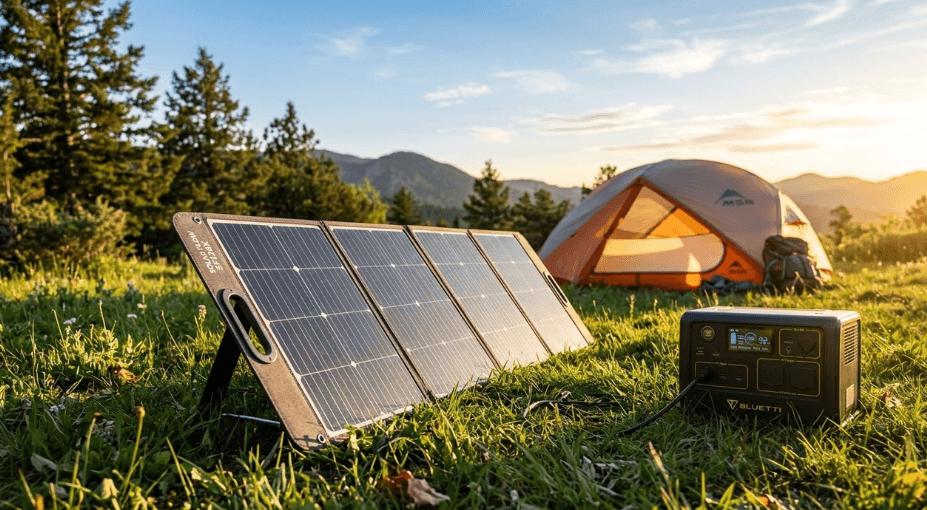
Clean, quiet power from the sun is no longer a niche idea. Solar panels now run everything from full home backup to a weekend campsite, and portable bifacial designs make them more flexible than ever. Here is how to pick the right size and type, and how Anker SOLIX’s lineup fits different lifestyles.
What Are Solar Panels?
Solar panels are devices that convert sunlight into electricity using photovoltaic cells. During operation they produce power without fuel, noise, or direct emissions, which makes them one of the cleanest sources of energy available. Modern solar panels use monocrystalline or polycrystalline silicon, with monocrystalline offering higher efficiency and better performance in limited space.
Anker SOLIX is a brand under Anker Innovations that focuses on solar and portable power products. Its lineup ranges from a compact 30W model to high-output 400W bifacial panels, giving users flexible options for different needs.
How Solar Panels Work
The technology works through the photovoltaic effect. When sunlight strikes the silicon cells, it excites electrons and creates an electric current. This direct current then flows to a battery, power station, or inverter for use. Bifacial panels go further by capturing light on both sides, boosting total output in the same footprint.
Why Efficiency Matters
Efficiency determines how much electricity a panel produces from the available sunlight. Higher-efficiency panels generate more power per square meter, which matters when space is limited or when you want faster recharging of a battery or power station. This is one reason bifacial solar panels have become popular among outdoor users.
Solar Panels Buying Guide
Choosing the right panels depends on your power needs, where you use them, and how portable you need them to be.
What Size Solar Panel Do You Need
Panel size should match your energy use. A 30W to 100W panel is enough for phones, cameras, and small USB devices. For portable power stations, camping fridges, laptops, and RV accessories, 100W to 400W is more practical. Whole-home systems typically use multiple rigid solar panels rated around 400W to 500W each.
How Many Solar Panels Do You Need
Sizing Solar Panels for a Whole Home
Many Canadian households need roughly 15 to 30 solar panels for a full home, assuming panels around 400W to 500W and a system size near 6kW to 12kW.
Sizing for Backup and Camping
Partial home backup, a small cabin, an RV, or a camping setup usually needs only 2 to 8 panels. Consider your annual electricity use, panel wattage, sunlight hours, shading, and battery goals to determine the right count.
Portable vs Traditional Solar Panels
Portable panels are foldable, lightweight, and ideal for camping, RVs, cabins, and charging power stations. Traditional ones are rigid, roof-mounted, and better for long-term home electricity generation. Choose portable units for mobility and traditional ones for permanent energy savings.
Monocrystalline vs Polycrystalline
Monocrystalline panels use single-crystal silicon and offer higher efficiency, better performance in tight spaces, and a clean dark look. Polycrystalline panels cost less but are less efficient and need more space for the same output. For home backup, RVs, and premium portable panels, monocrystalline is usually the stronger long-term choice.
Foldable vs Rigid Solar Panels
Foldable panels are easier to carry, store, and reposition, making them ideal for camping, road trips, and emergency kits. Rigid panels are heavier but more durable for permanent roof, cabin, or RV installations. Foldable designs favor flexibility, while rigid panels focus on stable daily generation.
Anker SOLIX Solar Panels Lineup
Anker SOLIX offers several models designed for portability and efficiency, with bifacial technology as a standout feature.
PS400 Bifacial Portable Solar Panel
The 400W model is the flagship, delivering high output for power stations, coolers, and longer trips. Its bifacial design captures light from both sides to maximize generation.
PS200 Bifacial Portable Solar Panel
The 200W panel balances power and portability, making it a strong choice for RVs, camping, and home backup when paired with a power station.
PS100 Bifacial Portable Solar Panel
The 100W panel is compact and easy to angle toward the sun, ideal for phones, lights, cameras, and small power stations.
PS30 Portable Solar Panel
The 30W panel is the smallest and lightest option, suited to charging small USB devices and keeping essentials powered on short trips. It is the most affordable entry point in the Anker SOLIX solar panels lineup.
Why Bifacial Design Stands Out
Bifacial designs capture reflected light on the back surface as well as direct sunlight on the front. This increases total energy output compared with single-sided panels, which is especially useful on reflective ground such as sand, snow, or light-colored surfaces.
Choosing Solar Panels by Use Case
Different lifestyles call for different equipment, so matching the panel to your main use keeps solar charging practical and efficient.
Solar Panels for Home Backup
The best panels for home backup pair with a battery energy storage system or portable power station. Higher-wattage units of 200W to 400W recharge batteries faster during outages. Prioritize weather resistance, high conversion efficiency, and compatibility with your backup system’s solar input.
Solar Panels for Camping
For camping, the best options are foldable, lightweight, and easy to angle toward the sun. A 100W to 200W panel works well for phones, lights, cameras, and small power stations, while 400W handles coolers and longer trips. Bifacial designs and rugged outdoor protection add value in the field.
Solar Panels for RVs
RV solar panels should balance power, durability, and space efficiency. Rigid roof panels suit permanent setups, while foldable panels work well when parking in shaded areas because they can be moved into sunlight. A practical RV setup often uses 200W to 800W depending on your devices and battery capacity.
Solar Panels for Off-Grid Living
Off-grid living needs more than a single panel. The best options for off-grid use should deliver high wattage, strong efficiency, and reliable battery compatibility. Many off-grid setups combine several rigid panels with large battery storage while adding portable panels for flexible charging.
Real-Time Market Context
The demand for this technology, especially portable models, is growing rapidly. Industry research from Precedence Research values the global portable solar panel market at $1.73 billion in 2025, projected to reach $8.36 billion by 2035 at a 17% compound annual growth rate. North America holds the largest share at 37%, while Asia-Pacific grows the fastest.
The broader portable solar charger market is also expanding, with estimates ranging from roughly $577 million to $2 billion in 2026 depending on scope. Outdoor recreation, emergency preparedness, and remote work are the main drivers, as more people seek reliable off-grid power for camping, disaster backup, and travel.
Why Portable Solar Is Growing
Outdoor Recreation
Millions of people camp and travel outdoors each year, and compact units let them power devices without a grid connection.
Emergency Preparedness
Backup power is a growing priority, and portable panels provide a renewable way to keep essentials running during outages.
Remote and Off-Grid Work
Remote workers and off-grid residents rely on portable panels to stay powered in locations without reliable electricity.
How to Get the Most from Your Solar Panels
A few practices help any solar panel deliver its best performance.
Angle Panels Toward the Sun
Direct sunlight produces the most power. Adjust the panel angle through the day to keep it facing the sun, especially in the morning and afternoon. Proper angling is one of the simplest ways to increase the daily output of your solar panels.
Avoid Shade
Even partial shade on one section can reduce output significantly. Position panels in open areas free of trees, buildings, or other obstructions.
Keep the Surface Clean
Dust and debris block light and lower efficiency. Wipe panels regularly to maintain consistent output, especially after outdoor trips. Clean solar panels can generate noticeably more power than dirty ones over time.
Pair with Compatible Storage
Match your panels to a compatible power station or battery. The right pairing ensures efficient charging and avoids wasted capacity. Anker SOLIX solar panels are designed to work seamlessly with the brand’s portable power stations.
Frequently Asked Questions
What size solar panel do I need?
A 30W to 100W panel handles small USB devices, while 100W to 400W suits power stations, fridges, laptops, and RV accessories. Most users find portable solar panels in this range cover their needs.
How many solar panels do I need for a home?
Most Canadian households need roughly 15 to 30 panels of 400W to 500W each for a full home, while backup setups need only 2 to 8 panels.
What is the difference between monocrystalline and polycrystalline solar panels?
Monocrystalline panels are more efficient and space-saving with a dark appearance, while polycrystalline panels cost less but need more space.
Are portable solar panels worth it?
Yes, for camping, RVs, cabins, and backup, portable panels provide clean, flexible power and pair well with power stations.
What is a bifacial solar panel?
A bifacial solar panel captures sunlight on both its front and back surfaces, increasing total energy output compared with single-sided panels. These bifacial solar panels are especially effective on reflective surfaces.
Can solar panels power a whole house?
Yes, a full home system typically uses 15 to 30 rigid panels rated around 400W to 500W each, combined with an inverter and optional battery storage. These home solar panels work together to offset most grid electricity use.
Conclusion
Solar panels offer a clean, flexible way to generate electricity for homes, RVs, campsites, and off-grid living. By understanding panel size, type, and efficiency, you can choose solar panels that match your energy needs and budget, whether that means a compact 30W panel for travel or a full array for home backup. As the portable solar panel market grows toward $8 billion by 2035, the technology keeps improving in efficiency and value. Pair your panels with compatible storage, keep them clean and angled toward the sun, and you will enjoy reliable renewable power wherever sunlight is available.