
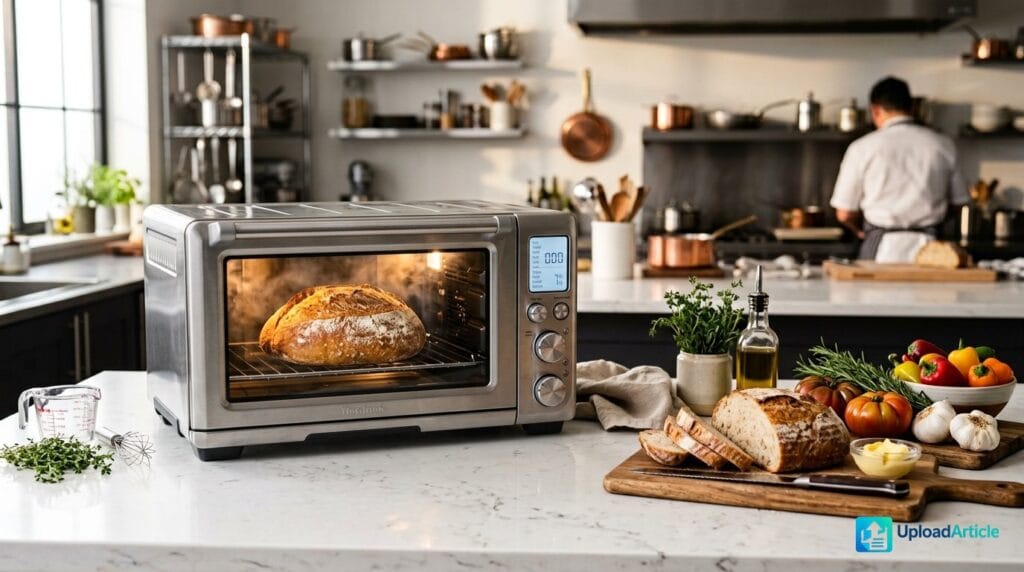
The modern kitchen has evolved dramatically over the past decade, and the humble countertop oven now stands at the center of that transformation. Home cooks increasingly turn to compact, multifunctional appliances that deliver professional-grade results without consuming the space, energy, or budget that full-sized ranges demand. Yet the sheer variety of available models, features, and price points makes selecting the right countertop oven feel overwhelming for even the most research-oriented buyer.
According to industry data compiled from leading consumer testing organizations, more than seventy percent of households now own some form of countertop oven, and the market continues expanding as manufacturers pack air frying, convection baking, steam cooking, dehydrating, and smart connectivity into units small enough to fit under a cabinet. The right model can replace a full-sized range for roughly eighty percent of daily cooking tasks while using thirty to fifty percent less energy according to ENERGY STAR estimates, making the selection decision one that affects both culinary possibilities and monthly utility bills.
This comprehensive guide examines the eight most powerful factors that separate an excellent purchase from a disappointing one, explores the cooking technologies that differentiate modern models, and provides the detailed framework needed to choose a countertop oven that perfectly matches your kitchen, cooking style, and budget. A thoughtfully selected countertop oven transforms daily meal preparation from a major production into a quick, enjoyable routine.
Understanding What Modern Countertop Ovens Actually Deliver
Before evaluating specific features, buyers must understand what a contemporary countertop oven can realistically accomplish.
The Technology Shift That Transformed the Countertop Oven Category
A decade ago, most of these appliances offered little more than basic toasting and simple baking at unpredictable temperatures.
Today’s models integrate multiple cooking technologies into single units, including precision convection fans, high-velocity air frying elements, steam injection systems, dual-zone temperature control, and smart connectivity with app-guided cooking programs.
The best models now achieve temperature accuracy within five degrees Fahrenheit, outperforming many full-sized built-in ovens that cost three to five times as much.
This technological leap means a properly selected unit can handle weeknight sheet-pan dinners, weekend bread baking, holiday side dishes, and everything in between.
Can a Countertop Oven Truly Replace a Full-Sized Range
For singles, couples, and small families, the answer is increasingly yes.
A full-sized model from brands like Breville, Ninja, or the CIARRA Nosh Oven Pro bakes a twelve-inch pizza, roasts a whole four-pound chicken, and produces two dozen cookies on a single rack.
It will not accommodate a twenty-pound Thanksgiving turkey or multiple full sheet pans simultaneously, but for the daily cooking that constitutes the vast majority of kitchen activity, a high-quality countertop oven handles the load with surprising capability.
The energy savings alone from using a compact appliance for small-batch cooking rather than heating an entire full-sized cavity add up to significant annual utility reductions.
8 Powerful Factors to Consider When Choosing Your Countertop Oven
The following eight factors represent the most important decision criteria that distinguish a countertop oven worth owning from one destined to gather dust in a cabinet.
1. Interior Capacity Must Match Your Household’s Real Cooking Needs
The single most common mistake buyers make involves purchasing a unit that is either too small to handle their typical meals or too large for their available counter space.
For one or two people, a compact model fitting four slices of toast and a nine-inch baking pan offers sufficient capacity while preserving precious counter real estate.
For families of three to four, a mid-sized appliance accommodating six slices of bread, a twelve-inch pizza, or a standard nine-by-thirteen casserole dish represents the practical minimum.
Larger families and frequent entertainers should consider an extra-large model fitting a thirteen-inch pizza, a five-pound roasting chicken, or multiple racks for simultaneous cooking.
Before purchasing any appliance in this category, measure the intended counter space including depth clearance for the door swing and height clearance beneath upper cabinets, as many full-featured models require sixteen to twenty inches of width.
2. Cooking Functions Determine the Countertop Oven’s True Versatility
The functions packed into a modern countertop oven directly determine how many separate appliances it can replace on your counter.
Basic models offer toast, bake, and broil, while advanced units add convection baking, air frying, slow cooking, dehydrating, fermenting, proofing dough, warming, and reheating.
The inclusion of convection capability represents perhaps the single most important functional upgrade because the circulating fan eliminates hot spots and reduces cooking times by approximately twenty-five percent compared to traditional bake modes.
Air frying has become a near-standard feature on mid-range and premium models, using high-velocity heated air to produce crispy exteriors without submerging food in oil.
Steam injection, found on advanced units like the CIARRA Nosh Oven series, adds another dimension entirely by allowing home cooks to control humidity levels during baking, keeping meats moist, promoting better rise in bread dough, and enabling sous-vide-style low-temperature precision cooking.
3. Heating Technology and Temperature Accuracy Separate Premium from Budget Models
Not all heating systems deliver equal performance, and the technology powering the appliance directly determines whether your cookies bake evenly or emerge burned on one side and raw on the other.
Budget models typically use two basic heating elements, one on top and one on bottom, which cycle on and off to maintain approximate temperature.
Premium designs employ multiple independently controlled quartz or ceramic elements combined with precision thermostats and convection fans that distribute heat evenly throughout the cavity.
Quartz elements found in the Breville Smart Oven series, for example, respond to temperature changes faster than traditional metal calrod elements, reducing preheat times and recovering set temperatures more quickly after the door opens.
Accurate temperature control matters especially for baking, where fluctuations of even ten degrees can dramatically affect the outcome of delicate items like souffles, macarons, and laminated pastry dough.
4. Energy Efficiency Makes the Countertop Oven a Financially Smart Investment
The energy consumption argument strongly favors compact appliance ownership for households that frequently use their full-sized range for small meals.
A typical full-sized electric oven draws between 2,400 and 5,000 watts and requires substantial preheating time because of its large cavity volume.
A standard model draws between 1,200 and 1,800 watts, heats its smaller interior space to target temperature in three to six minutes rather than fifteen to twenty, and uses approximately one-third to one-half the total energy of a full-sized oven for equivalent cooking tasks.
Over the course of a year, a household that shifts the majority of its baking, roasting, and reheating from the full-sized range to a countertop oven can expect noticeable reductions in electricity consumption.
5. Size and Countertop Footprint Demand Careful Measurement Before Purchase
An appliance that technically fits on the counter but leaves no usable workspace around it defeats the purpose of adding a convenient secondary cooking option.
The most popular models range from twelve to twenty inches in width, ten to fourteen inches in depth, and nine to thirteen inches in height.
Beyond the static footprint, consider the clearance required for the door to open fully, which typically adds four to six inches of depth to the operational space requirement.
Overhead clearance matters critically, as some models require six or more inches of space between the top of the unit and any overhead cabinet to safely vent hot air.
For genuinely space-constrained kitchens, vertical storage designs like the Ninja Flip Up and Away countertop oven reduce the active footprint by approximately fifty percent when not in use by tilting the unit upward against the backsplash.
6. Ease of Cleaning Directly Affects How Often You Will Actually Use It
A countertop oven that takes fifteen frustrating minutes to clean after every use inevitably becomes an underutilized appliance regardless of its cooking performance.
The best countertop oven models prioritize cleanability through non-stick interior coatings, removable crumb trays that slide out from the bottom, and rack systems that lift out without wrestling.
Steam cleaning functionality, available on select premium countertop oven units, uses injected moisture to loosen baked-on food residue and grease, reducing the need for harsh chemical cleaners and aggressive scrubbing.
A design with a removable door, though less common, provides the easiest access for deep cleaning the entire interior cavity.
Buyers who plan to use their countertop oven several times weekly should prioritize cleanability equally with cooking performance, because a dirty oven that sits unused saves no time and cooks no meals.
7. Smart Features and Connectivity Add Convenience Worth the Premium
Smart models now offer Wi-Fi connectivity, companion smartphone applications, guided cooking programs, and voice control integration with Amazon Alexa and Google Assistant.
The CHEF iQ MiniOven and TOSHIBA OptiChef represent two examples of the smart countertop oven category, offering app-controlled temperature monitoring, recipe-guided cooking sequences, and push notifications when food reaches target doneness.
While smart features add cost, busy households benefit from the ability to monitor cooking progress from another room, receive alerts when preheating completes, and access recipe libraries directly integrated with the appliance controls.
For less technology-inclined buyers, a countertop oven with straightforward knob and button controls paired with a clear digital display offers all the practical functionality without the learning curve.
8. Price and Value Must Account for What the Countertop Oven Replaces
Pricing spans an enormous range from budget models under sixty dollars to premium units exceeding four hundred dollars, and understanding what drives those differences prevents both overspending and underspending.
Budget options between forty-five and eighty dollars handle basic toasting, baking, and broiling for light users who primarily reheat leftovers and make toast.
Mid-range units between one hundred fifty and two hundred fifty dollars add convection, air frying, larger capacities, better temperature accuracy, and more durable construction that justifies the investment for regular cooking.
Premium options above three hundred dollars deliver commercial-grade temperature precision, steam injection, multiple independent heating elements, smart connectivity, and build quality that supports daily heavy use for years.
The right price point depends on how many appliances the unit replaces; a premium model that eliminates a separate toaster, air fryer, and dehydrator while handling daily cooking represents better value than a budget option that cannot perform those functions.
Comparing the Top Countertop Oven Technologies on the Market in 2026
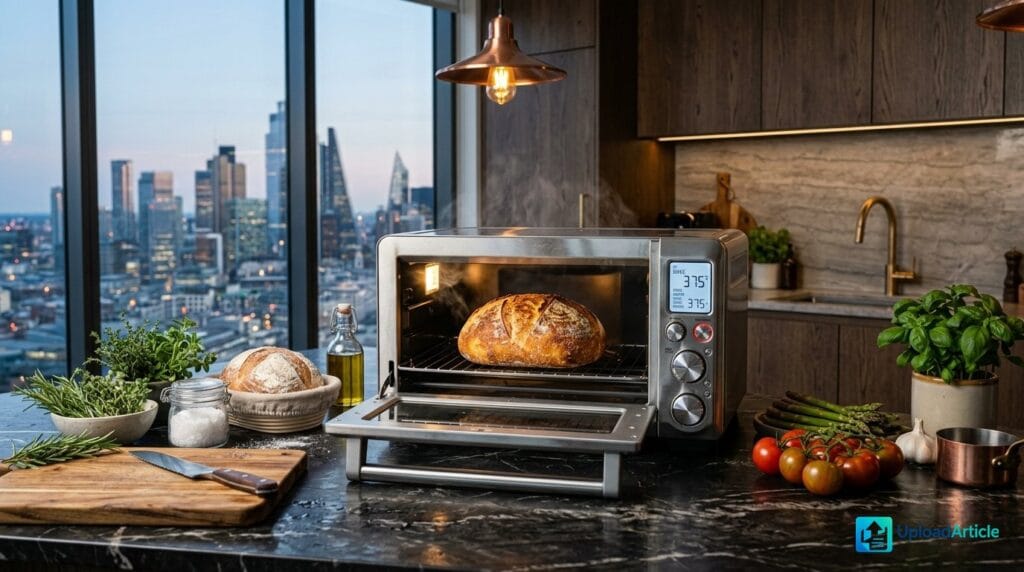
Understanding the underlying cooking technologies helps buyers evaluate competing models on more than just brand reputation.
Convection Baking Technology in Modern Countertop Ovens
Convection cooking uses a fan to circulate hot air continuously throughout the oven cavity, eliminating the temperature stratification that causes uneven baking in traditional ovens.
A unit equipped with true convection includes a third heating element surrounding the fan, ensuring the circulated air remains at the set temperature rather than cooling as it moves.
The practical benefit of convection includes reduced cooking times, the ability to use multiple racks simultaneously without rotating pans, and superior browning on roasted vegetables and meats.
Air Frying Technology Built Into Countertop Ovens
Air frying represents the most heavily marketed feature on current countertop oven models, and the technology delivers genuine value when properly implemented.
Unlike standalone basket-style air fryers, a countertop oven with air fry capability distributes the high-velocity heated air across a larger rectangular cooking surface using mesh racks that allow airflow beneath the food.
This design means the air frying function handles larger batches than a basket air fryer while producing comparable crispness on foods like frozen french fries, chicken wings, and breaded cutlets.
The best implementations of air frying combine the convection fan running at maximum speed with a dedicated upper heating element and a perforated air fry basket or mesh tray.
Steam Injection and Humidity Control in Advanced Countertop Ovens
Steam cooking represents the newest frontier in this appliance category, appearing on advanced models like the CIARRA Nosh Oven series, the FOTILE ChefCubii, and the Anova Precision Oven.
A countertop oven with steam injection allows the cook to control humidity levels inside the cavity, enabling techniques previously impossible in a compact appliance.
Adding steam during the initial phase of bread baking keeps the crust flexible longer, allowing better oven spring and a taller, more open crumb structure.
Steam injection while roasting chicken or baking salmon prevents surface drying, producing noticeably juicier results than dry-heat cooking alone, and this capability alone justifies upgrading to a premium countertop oven for many home cooks.
At low temperatures with high humidity, a steam-enabled countertop oven functions as an immersion circulator for sous-vide cooking, holding precise temperatures for extended periods without requiring vacuum-sealed bags and water baths, making the countertop oven one of the most versatile cooking tools in the modern kitchen.
How to Choose the Right Capacity for Your Countertop Oven
Capacity ratings for countertop ovens appear in quart measurements or slice counts, but these numbers only tell part of the sizing story.
Countertop Oven Capacity Guidelines by Household Size
Single-person households and couples who cook small batches benefit from a compact countertop oven with capacity between ten and eighteen quarts, fitting a nine-inch pizza or two to four chicken thighs comfortably.
Families of three to four should target a countertop oven capacity between eighteen and twenty-five quarts, accommodating a twelve-inch pizza, a standard nine-by-thirteen casserole pan, or a whole four-pound roasting chicken.
Larger families and those who entertain frequently require a countertop oven exceeding twenty-five quarts, supporting dual-rack cooking, thirteen-inch pizzas, and five-pound roasts with room for vegetable sides on a separate rack.
The Practical Test for Countertop Oven Capacity
Rather than relying solely on manufacturer capacity claims, evaluate a countertop oven by confirming it fits the specific cookware you use most often, because a countertop oven that cannot accommodate your essential pans will disappoint regardless of its other features.
A countertop oven that cannot accommodate your favorite nine-by-thirteen baking dish, quarter-sheet pan, or Dutch oven will frustrate you every time you reach for those essential kitchen tools and realize they simply will not fit.
Installation and Placement Guidelines for Your Countertop Oven
Proper placement significantly affects both safety and cooking performance for any countertop oven.
The countertop oven should sit on a heat-resistant surface with at least four inches of clearance on all sides to allow proper ventilation and prevent heat damage to surrounding cabinets and walls.
Never position the appliance directly beneath flammable materials including curtains, paper towel holders, or wooden upper cabinets without verifying the manufacturer’s specified clearance requirements, as a countertop oven generates significant external heat during extended cooking sessions.
Most units plug into standard 120-volt outlets and draw between twelve and fifteen amps, meaning they should occupy a dedicated circuit or share an outlet only with low-draw devices to prevent tripping circuit breakers during use.
Frequently Asked Questions
What is a countertop oven and how does it differ from a toaster oven?
A countertop oven is a compact electric cooking appliance that sits on the kitchen counter and performs multiple cooking functions including baking, broiling, roasting, toasting, and often air frying and convection cooking, whereas a basic toaster oven typically handles only toasting and simple reheating.
Can a countertop oven fully replace a regular full-sized oven?
For most daily cooking tasks including baking, roasting, and reheating for households of one to four people, a quality countertop oven can replace a full-sized oven for approximately eighty percent of meals, though very large items like holiday turkeys exceed most countertop oven capacities.
How much energy does a countertop oven use compared to a full-sized range?
A countertop oven uses approximately thirty to fifty percent less energy than a full-sized range for equivalent cooking tasks because its smaller cavity heats faster and requires less total wattage, making it a more energy-efficient choice for everyday cooking.
What size countertop oven do I need for a family of four?
A family of four should look for a countertop oven with at least eighteen to twenty-five quarts of capacity, accommodating a twelve-inch pizza, a nine-by-thirteen casserole pan, or a four-pound whole chicken with room to spare.
Are countertop ovens with air fryer functions as effective as standalone air fryers?
A countertop oven with a built-in air fry function produces comparable crispness to a standalone air fryer while offering a larger cooking surface, though the air fry mode on a countertop oven may take slightly longer due to the larger cavity volume requiring more air circulation.
What features should I prioritize when buying a countertop oven?
Prioritize convection cooking capability for even heat distribution, adequate interior capacity matching your household size, accurate temperature control for reliable baking results, and easy-clean features including non-stick interiors and removable crumb trays when selecting a countertop oven.
Conclusion
Selecting the right countertop oven transforms daily cooking from a chore requiring a full-sized range into an efficient, energy-conscious, and genuinely enjoyable experience that fits the way modern households actually prepare meals.
The eight factors explored in this countertop oven guide, including interior capacity, cooking functions, heating technology, energy efficiency, physical footprint, cleanability, smart features, and value relative to replaced appliances, provide a complete framework for evaluating any model with confidence.
Whether your kitchen demands a compact unit that preserves precious counter space, a mid-range convection countertop oven that handles family dinners five nights a week, or a premium steam-injected model capable of professional-grade bread baking and sous-vide cooking, the market in 2026 offers options tailored to every cooking style and budget.
The best countertop oven for your kitchen is the one that matches your actual cooking habits, fits your available space, and delivers the specific functions you will use regularly. A countertop oven that sits unused because it is too complicated, too small, or too difficult to clean serves no purpose, regardless of its specifications on paper.
